Emergency Electrical Service in Los Angeles

Sparking, hot breakers, repeated trips, partial power loss, burning smell, wet electrical equipment, or an unsafe panel after a leak. Dense buildings add access, shutoff, neighbor, and manager coordination, so the booking note should include safety facts and access details.

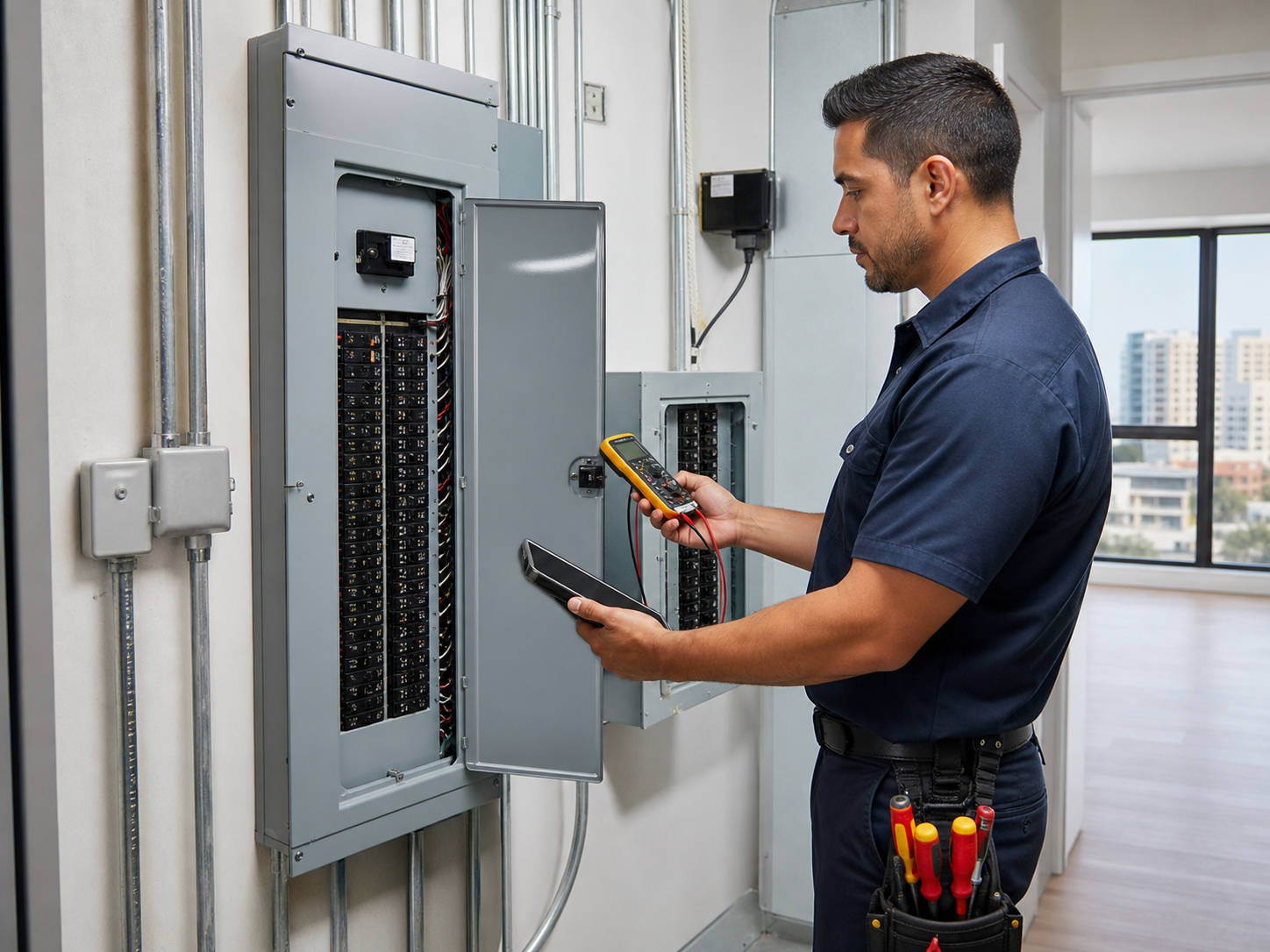
Electrician checking a residential multi-unit electrical panel in a Los Angeles condo utility room

Urgent signs

burning smell, partial power loss, tripping breakers, wet panels, and urgent safety triage. Do not treat a safety symptom as a normal appointment if it involves active water, heat risk, burning smell, repeated tripping, sewer exposure, or damage moving into another unit. The first step is to reduce risk, then book the visit with access solved.

For urban LA condos and apartments, emergency dispatch needs practical details: building entry, parking, unit floor, elevator rules, roof or mechanical-room access, water shutoff location, panel location, and whether a property manager or neighbor must be contacted. The more precise the note, the less likely the visit gets slowed by a locked roof hatch, missing panel key, unreserved elevator, or shared shutoff that requires notice.

First five minutes

For electrical emergencies, the first five minutes are about containment, not diagnosis. Stop the action that is making the condition worse. Do not repeatedly reset a breaker, keep running a leaking system, pour water into a backing-up drain, or continue operating equipment that smells hot. Move people away from the hazard, photograph the symptom from a safe distance, and write down what changed: time, room, smell, sound, water path, breaker behavior, thermostat reading, affected fixtures, or whether neighboring units are involved.

Then solve access before the technician arrives. In dense Los Angeles buildings, the emergency may be technically simple but operationally blocked. A locked mechanical room, front-desk check-in, elevator reservation, roof key, parking garage height limit, or property manager approval can add more delay than the repair itself. That is why the booking flow should include the building contact, access codes when appropriate, unit floor, equipment location, and whether the issue affects common property.

Emergency triage table

Use this to decide what to include in the booking note and what not to do before help arrives.

ConditionWhat it can meanAction before dispatch
Immediate safety symptomSparking, hot breakers, repeated trips, partial power loss, burning smell, wet electrical equipment, or an unsafe panel after a leak.Stop using the affected system if safe, keep people away from the hazard, and book with clear urgency notes.
Building access problemCondo electrical work often requires load calculations, meter-room access, HOA approval, utility coordination, parking for service equipment, and clean inspection documentation.Contact the manager or HOA, confirm roof, panel, garage, shutoff, elevator, or mechanical-room access, and add those details to the booking.
Damage spreading beyond one roomA repair may involve another trade, a neighbor below, common property, or documentation for insurance or management.Photograph the path, protect nearby belongings, avoid destructive investigation, and note who else has been notified.
Unclear scopeThe visible failure may be a symptom of panel capacity, shared plumbing, old equipment, blocked airflow, utility service, or prior unpermitted work.Book the emergency visit as triage first. Replacement or permanent repair should be scoped only after the safety condition is stabilized.

Dense LA emergency context

Emergency electrical work in Los Angeles is different from suburban service because the building often controls the critical path. Downtown LA, Koreatown, Hollywood, West Hollywood, Mid-Wilshire, Century City, Pasadena, Glendale, and other dense markets can have parking restrictions, security desks, shared utility rooms, old risers, stacked units, and strict work windows. Even when the technical repair is routine, the technician needs a practical path to the equipment and a safe way to isolate the problem.

The emergency page is therefore connected to the service pages and city pages instead of acting as a thin phone-only landing page. If the issue stabilizes, homeowners can move from emergency triage into a normal service decision: repair, replacement, inspection, cost planning, permit planning, or a coordinated multi-trade visit. If it does not stabilize, the priority remains safety and containment.

Book emergency electrical service.

Use the booking link and include safety symptoms, access rules, and whether another unit is affected.

Homeowner Questions

Short answers for the questions that usually decide whether this is a repair, replacement, inspection, or emergency visit.

When is electrical urgent?

Sparking, hot breakers, repeated trips, partial power loss, burning smell, wet electrical equipment, or an unsafe panel after a leak.

How do I prepare?

Prepare photos, access, shutoffs or panel location, property manager contact, and urgent safety notes before booking.

Service notes from urban LA homeowners

These visible review bodies are kept in exact parity with the JSON-LD review schema on this page.

Nadia M. Koreatown

The team treated our condo like a building project, not just an AC call. They checked roof access, panel capacity, condensate routing, and the HOA work window before touching the equipment.

Derek L. Downtown LA

Our leak was moving toward the unit below us. LA Metro Home Systems helped isolate the shutoff, documented the moisture path, and explained what the plumber and electrician needed to check next.

Priya S. West Hollywood

The electrical visit was clear and practical. They did not guess on the EV charger. They looked at the panel, garage path, utility territory, permit steps, and the HOA charger rules.

Book Call